
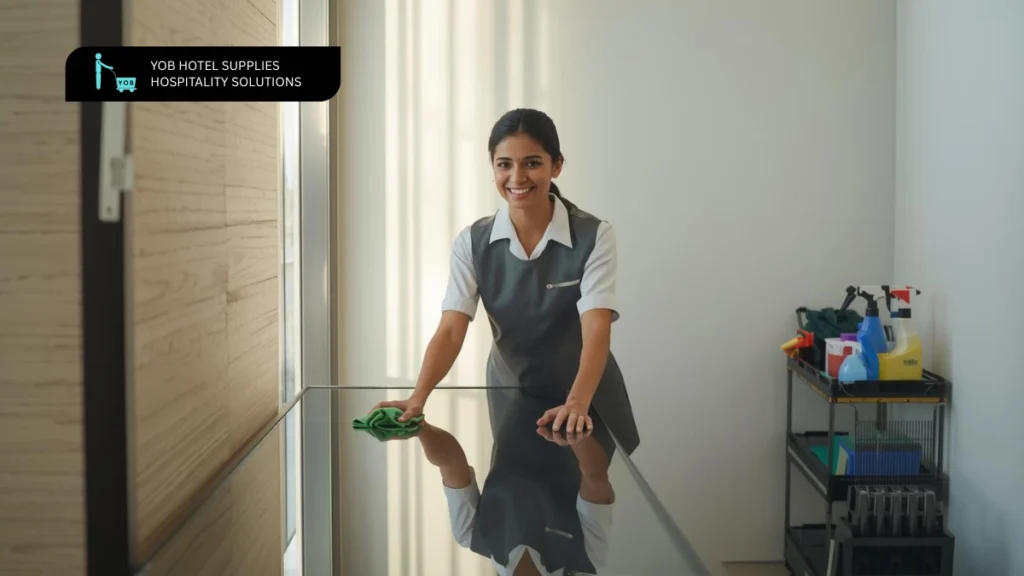
Why the Right Hotel Cleaning Supplies Matter
Walk into a guest room at dawn. The carpet is clean, the mirror flawless, the surfaces free of streaks. That moment of first sight speaks louder than a thousand welcome signs. For hoteliers, one truth holds firm: cleanliness is the silent ambassador of hospitality.
When a guest opens the door and the room gleams, they feel at ease. When they spot scuffs, dust, or water marks, trust falters. That’s where top-tier hotel cleaning supplies matter. They don’t just remove grime — they protect your property’s promise, your brand’s reputation. Every successful property relies on high-quality hotel cleaning supplies to maintain a spotless reputation. Every successful property relies on high-quality hotel cleaning supplies to maintain a spotless reputation.”
From lobbies to bathrooms, from glass panels to multi-surface counters, the right supplies make every corner guest-ready. And when housekeeping runs like clockwork, your operations hum. On the other hand, the wrong product choice leads to extra labour, wasted chemical, and disappointed guests.
In this guide we’ll walk through:
- Why cleaning standards matter in hotels.
- The essential types of products used in hospitality.
- How to understand the R1 to R9 chemical system.
- The complete tool-and-chemical “must have” list for hotels.
- Safety, storage and eco-friendly alternatives for a modern hotel.
This is your roadmap to smart procurement and operational excellence in hotel cleaning supplies.
1. Why Cleaning Standards Matter in Hotels
In a hotel, cleanliness isn’t optional — it’s fundamental. For guests, one of the first things they judge is how clean the room looks and feels. A small stain, a dirty corner, a foggy mirror — these whisper “inattention” louder than any signage.
Research and industry data back this up. Properties that consistently deliver spotless rooms see better reviews, fewer complaints and stronger repeat bookings. For example, a review on “what cleaning supplies do hotels use?” highlights how professional-grade supplies are essential to maintaining guest satisfaction across high-traffic environments.
In addition, in high-traffic environments like hotel lobbies, corridors and guest rooms, wear and tear happen fast. If cleaning standards slip, it shows. That means your supplies must be efficient, effective and designed for hospitality use — not everyday home cleaning.
Another factor: hygiene and health. Post-pandemic guests expect visible proof of cleanliness. When housekeeping staff use the right hotel cleaning supplies, it reinforces safety and trust — and that matters as much as comfort.
In short: higher cleaning standards = higher guest trust = higher occupancy and revenue.
Your choice of supplies, and how they’re used, is a strategic investment — not just a cost.
2. Understanding R1 to R9 Housekeeping Chemicals
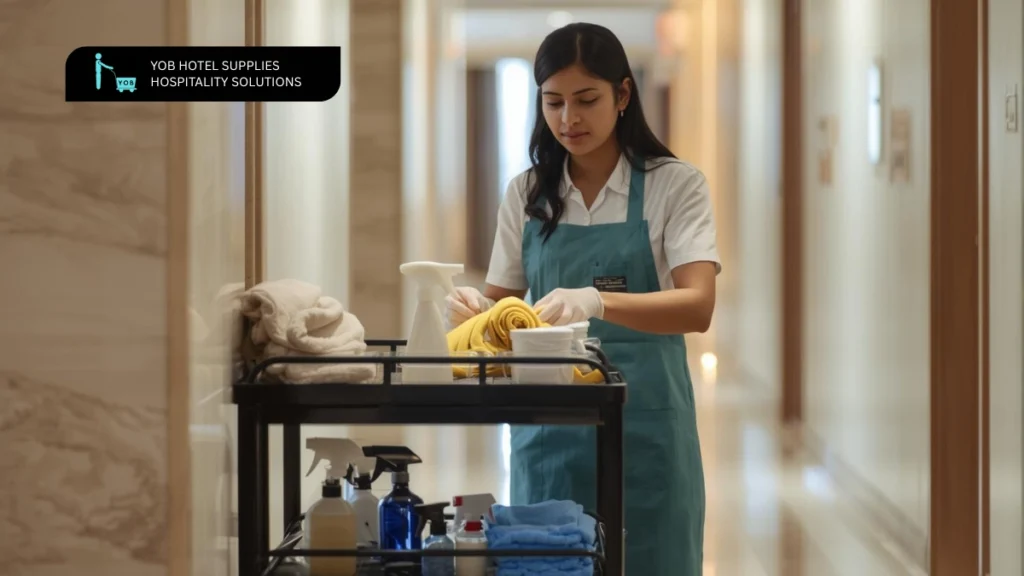
When you dive into professional cleaning, you’ll encounter the R-series system (R1 through R9) used by major brands such as TASKI / Diversey. This system assigns a number to each category of cleaning chemical, for simple identification and safe usage in the hospitality environment.
- R1 – Bathroom Cleaner:
Formulated to remove soap scum, water stains, and tough mineral deposits from washroom surfaces. It leaves a fresh fragrance while maintaining hygiene in sinks, tiles, and fittings. - R2 – Multi-Surface Cleaner & Disinfectant:
A versatile cleaner used for daily maintenance of furniture, desks, counters, and tables. It disinfects while removing dirt and fingerprints, making it perfect for guest rooms and reception areas. - R3 – Glass Cleaner:
A streak-free cleaner designed for mirrors, windows, and glass panels. It ensures spotless transparency and shine — enhancing the appearance of rooms, lobbies, and elevators. - R4 – Floor Cleaning Concentrate:
A concentrated solution for mopping and scrubbing hard floors in high-traffic areas like corridors, restaurants, and banquet halls. It provides deep cleaning without leaving residue. - R5 – Air Freshener / Odour Neutraliser:
Used to keep washrooms, corridors, and lobby spaces smelling pleasant. It neutralises odours rather than masking them, leaving behind a long-lasting, refreshing scent. - R6 – Toilet Bowl Cleaner:
A powerful descaling solution formulated to remove stubborn stains, rust marks, and limescale inside toilet bowls and urinals. Ensures complete sanitation with minimal effort. - R7 – Carpet & Upholstery Cleaner:
Specially formulated for soft surfaces like carpets, sofas, and curtains. It helps lift dirt and restore fabric freshness without damaging texture or colour. - R9 – Eco or Green-Line Variant:
An eco-friendly alternative designed with biodegradable ingredients and low-VOC formulas. Ideal for hotels that prioritise sustainable cleaning and environmental safety.
Why is this system so useful? Three reasons:
- Safety & clarity: Staff instantly recognise R-1 vs R-6, reducing mistakes.
- Efficiency: Easier inventory control and standardisation across suites, floors, properties.
- Training: Simplifies new staff onboarding — show them the R-range and what number goes where.
One housekeeping manager put it simply: “We follow R1–R9; each label tells us what to use where.”
For your hotel, listing R1–R9 in your cleaning-supplies specification sheet removes ambiguity and sets a professional tone. It also aligns with our broader theme of structured hotel cleaning supplies procurement.
3. Common Hotel Cleaning Chemicals and Their Applications
Now that we understand the system, let’s walk through key categories of hotel cleaning supplies and their applications. These will form the core of your cleaning-products programme.
Bathroom Cleaner (R1)
Bathrooms see the toughest wear: soap residue, hard-water stains, mineral deposits, mould and odours. That’s why a strong bathroom cleaner is non-negotiable.
Look for: descaling agents, anti-mould capability, safe for tiles and sanitary ware.
Hotels that skip this often see watermarks on taps or streaks in showers — both visually glaring.
Multi-Surface Cleaner (R2)
This is the “do-everything” hero. From the room’s desk, nightstand, sofa arms, to lobby furniture — multi-surface cleaners keep things consistently tidy.
Key features: low residue, safe for wood/metal/plastic, good slip-resistance if used on surfaces near walking paths.
Glass Cleaner (R3)
Windows, mirrors, glass partitions — they all show streaks, smudges, fingerprints and dust.
A dedicated glass cleaner ensures a crystal-clear finish. Points to test: no hazing in strong light, stays clear after guest use, safe near electronics or framed glass.
Floor Cleaning Supplies (R4)
Floors in hotels take a pounding: guests dragging bags, service trolleys, frequent footfall, spills. You’ll need: high-traffic floor cleaner concentrates, sealers and sometimes polish finishers.
As one equipment guide states: “Hotels require vacuum cleaners, mops, brushes … plus specialized cleaning chemicals for surfaces.”
Air Fresheners & Odour Neutralisers (R5)
Clean rooms look good — but they must feel good. Fresh-smelling spaces give positive emotional cues to guests.
Choose long-lasting odour control solutions — not just perfume sprays — and ensure they’re compatible with your overall cleaning system.
Toilet Bowl Cleaner (R6)
Specialised heavily acid-based or high-alkaline formulas handle the toughest stains in toilets and urinals.
Mixing this with other general-purpose cleaners is a common error — and a safety hazard. The R-system resolves this.
Carpet & Upholstery Cleaner (R7)
Soft surfaces trap dust, allergens and wear quickly. A dedicated carpet/upholstery chemical ensures your sustainable furnishings, decorative chairs and carpets keep their healthy look.
Eco / Green Variants (R9)
Growing guest expectation: “Are we being sustainable?” You win trust when you offer rooms cleaned with low-VOC, biodegradable chemicals. One guide says: “In today’s environmentally conscious market, incorporating eco-friendly products into your cleaning regimen not only supports sustainability but also appeals to guests.”
4.Essential Hotel Cleaning Supplies Every Housekeeper Needs
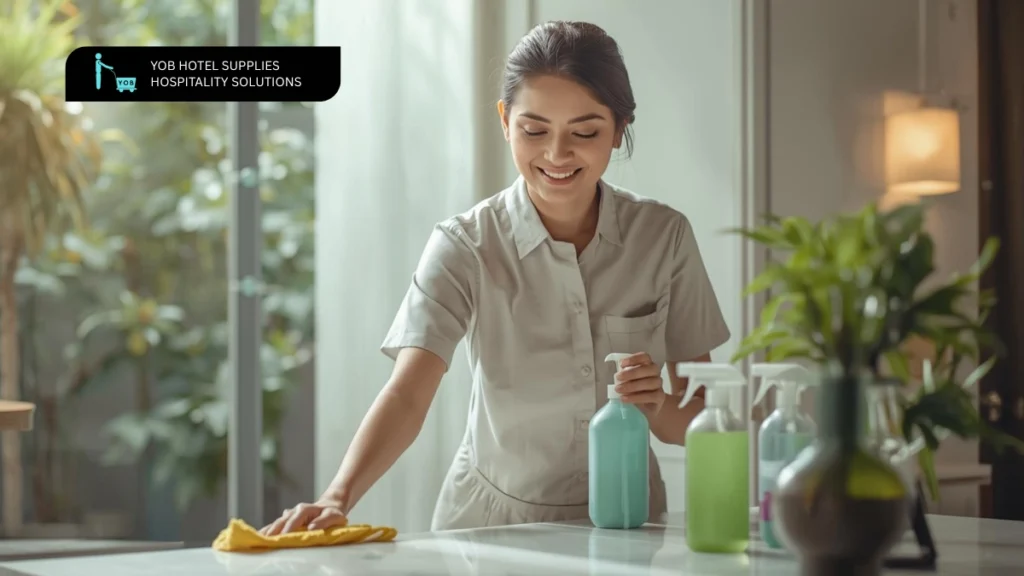
A world-class set of hotel cleaning supplies doesn’t only consist of bottles and liquids. It includes the right tools, consumables and systems. Here’s a curated “must-have” list for hotel operations.
Cleaning Tools
- Microfiber cloths (colour-coded for rooms, bathrooms, kitchen) — recommended by industry guides for hygiene and efficiency. EMist
- Mops and wringer trolleys — especially for floors, corridors and banquet halls.
- Vacuum cleaners with attachments — for carpets, upholstery, corners.
- Squeegees and glass-cleaning accessories — for windows and decorative glass.
- Janitor trolleys — to carry chemicals, tools, fresh linen carts in one go. A trolley boosts speed and professionalism.
- Disposable gloves, safety masks, wet-floor signage — housekeeping staff must be protected.
Chemicals & Consumables
Beside the R-system chemicals we outlined, you’ll want:
- All-purpose cleaner for miscellaneous surfaces.
- Disinfectants for high-touch areas (door handles, light switches).
- Linen detergent and fabric softeners (though technically indirect, part of cleanliness).
- Waste-bin liners, disposal bags, protective coverings for mattresses.
- Air fresheners, odour neutralisers.
- Eco-friendly chemical lines or “green” labels for guest rooms with sustainability branding.
Why this matters
Every piece — tool and chemical — works together. Your staff should be able to access the right hotel cleaning supplies quickly, apply them correctly, and move on to the next room. When tools are missing or chemicals mis-used, you get delays, extra costs, and guest disappointment. Partnering with a trusted supplier like YOB Hotel Supplies guarantees that your hotel cleaning supplies meet both hygiene and brand standards.
You can streamline with an internal inventory list, quickly referencing each R-number, each tool, and mapping them to room types and service tiers. That gives you operational consistency and reduces waste.
5. Safety, Storage and Eco-Friendly Alternatives
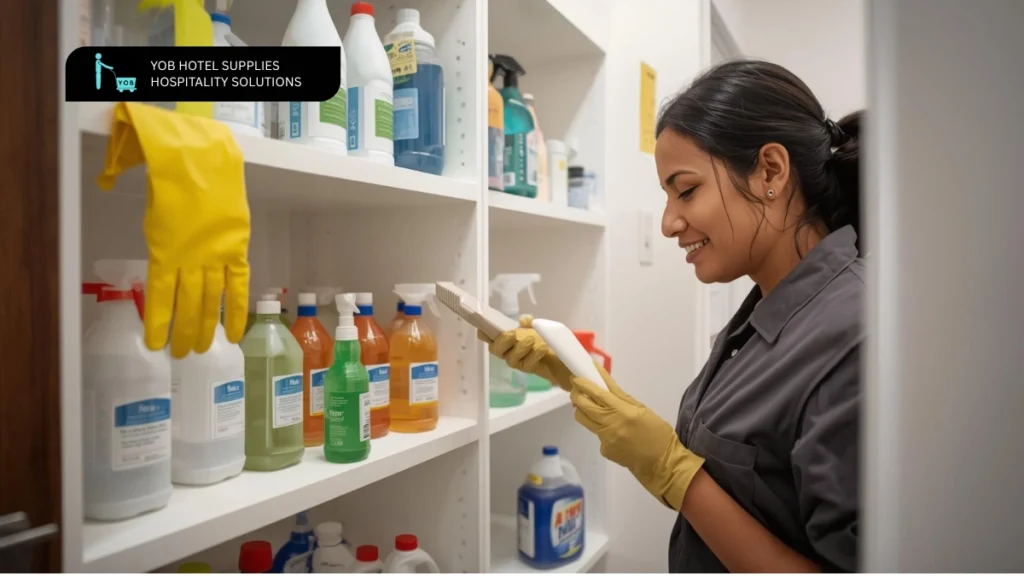
Using the correct hotel cleaning supplies is one thing — storing them right and using them safely is another. As your brand evolves, focusing also on eco-friendly alternatives elevates you ahead of the curve. Eco-conscious hoteliers now prefer biodegradable hotel cleaning supplies under the R9 green-line range.
Safety & Storage Tips
- Label all chemical containers clearly with contents, dilution instructions and surface compatibility.
- Use colour-coded mop cloths and cleaning tools to avoid cross-contamination — e.g., bathroom vs kitchen vs guest room.
- Store chemicals in a dedicated, ventilated area — away from guest rooms and ideally locked.
- Provide housekeeping staff with gloves, eye-protection, wet-floor signage.
- Always follow manufacturer instructions: dilution ratios, dwell time (the time a chemical must sit before wiping), rinsing if required.
- Keep Material Safety Data Sheets (MSDS) for all chemicals in a binder or digital file for staff reference.
Eco-Friendly Alternatives & Sustainability
- Choose chemicals labelled with “low VOC”, “biodegradable”, “eco-certified”. Guests increasingly ask: “Was this cleaned sustainably?”
- Consider microfiber cloth reuse programmes rather than single-use wipes.
- Limit chemical waste by training staff: correct dilution, correct application, minimal overspray.
- Communicate your sustainability efforts on-property: signage in guest rooms can highlight your “green cleaning” programme, boosting guest perception.
External authority backs this: “In today’s environmentally conscious market, incorporating eco-friendly products into your cleaning regimen… appeals to guests.”
By showing you use modern, safe, clean and sustainable supplies, you enhance guest trust and align with global hospitality trends.
6. Building Your Hotel Cleaning Supplies Programme
Here’s how to bring everything together — turn knowledge into a system.
Step 1: Audit Your Current Supplies
- What do you currently use for bathrooms, glass, floors, upholstery?
- Do you have an R1–R9 map (or equivalent)?
- Are tools missing? Are chemicals over-stocked or under-used?
Step 2: Define Your Service Zones
- Guest rooms (standard/boutique/luxury)
- Banquet / conference spaces
- Lobby & corridors
- Back-of-house (kitchen, staff areas)
- Special spaces (spa, gym, pool)
Mapping supplies to zones lets you allocate the right hotel cleaning supplies per zone for maximum efficiency.
Step 3: Create an Inventory & Usage Chart
Use a table: Item | Zone | Recovery Cycle | Frequency | Responsible Staff
Include: chemical type (R-number), tool type, storage location, update frequency.
Step 4: Train Your Housekeeping Team
- Teach the R1–R9 system.
- Show proper dilution and tool-use.
- Run refresher sessions every 6 months.
- Use visuals and checklists for daily/handover routines.
Step 5: Monitor, Measure & Optimise
Track metrics:
- Guest cleanliness complaints or reviews.
- Chemical usage vs budget.
- Staff time per room (cleaning efficiency).
- Feedback on sustainability (guest survey).
Then refine your hotel cleaning supplies list in response to data.
Step 6: Communicate Your Clean Promise
Make your cleaning-standards visible to guests: signage in rooms, dedicated “Green Clean” rooms, internal communications. When guests know you have a structured cleaning regime, their trust increases.
7. Simplify Your Hotel Cleaning Routine with the Right Supplies
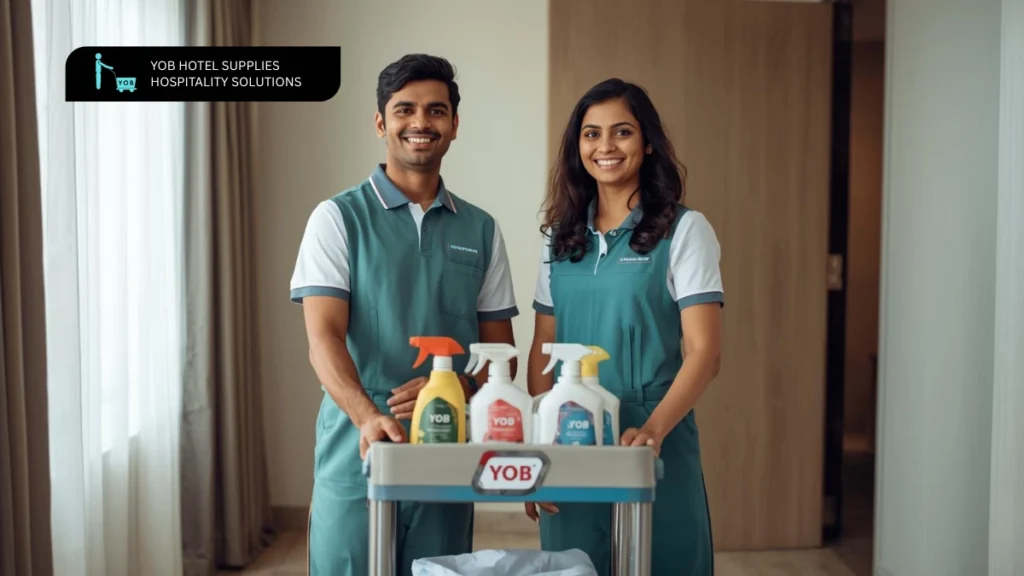
Cleaning for a hotel isn’t about mops and sprays alone. It’s about consistent guest experience, operational efficiency and brand trust. When you invest in the right hotel cleaning supplies—from R1 to R9 chemicals, from multi-surface cleaners to glass polishes, from microfiber tools to eco-friendly substitutes—you’re building more than cleanliness. You’re building loyalty.
So ask yourself:
- Do I have a clear R-number system in place?
- Are my housekeeping teams equipped with the right tools and chemicals?
- Can I articulate our cleaning promise to guests?
- Are we moving towards sustainable, guest-friendly cleaning practices?
If your answer is “yes” — you’re on track.
If it’s “not quite”, now is the time to act.
Explore our full range of professional-grade hotel cleaning supplies and ensure every guest step, every glance, every stay — is as spotless as your ambition.
Choosing the right hotel cleaning supplies from trusted brands like YOB Hotel Supplies ensures lasting guest satisfaction. A clean hotel isn’t a coincidence — it’s the result of careful planning and the right hotel cleaning supplies from trusted partners